I clearly remember thinking about 2020 at various points in my life. “What would life be like?” Not only does 2020 play on perfect vision, but for me it signifies another iconic figure — 65.
I’ll be turning 65 this coming summer , turning to a new phase in life. Typically one is expected to wind it down. Fortunately I had two great role models for active old age. My father began living his life-long dream at 65 by working full time on a show garden for the public. My mother began writing a local history column that turned into a published book.
While 2020 opens the third decade of the 21st century (unbelievably) it is just about the only consistent date that so many companies and governments focused on for many years. So much for long-term planning!
So for me, 2020 really also represents, in a way, the beginning of the end — the end of long-term planning.Chaos theorists would describe our times as a ‘dancing landscape’. The landmarks shift ever-faster and milestones flip past in a blur. The goal-posts are questioned. “What was I looking for?”
What happens next is anyone’s guess. But we can expect scenarios with emergent properties. That is, the whole new system can display properties not found in the component parts or in the past.Given that we live in unprecedented times, we should prepare for mega surprises. That means ever-more agile learning and routine transformative adaptation.
That is, until we settle into a brand new stable pattern.
Things don’t look good for democracy right now. Fear demands the strong man. Chaos demands order. Meaningless demands dogma. Many people have abandoned reason, deliberation and compromise. They’re moving toward mass hysteria.
The solution? It is easier to create disorder than order.
Its going to take considerable effort to get people to set down, rebuild trust and respect, and forge a new civil order. Don’t let panic overcome reason and empathy.
The simple solution, to be expedient, will invariably lead to invoking the baser human instincts. The real solution will be slower and demand a great deal of patience and perseverance. The real solution will be based on core human values and will demand collaboration across the human spectrum.
2020 seems to be a turning point. Your leadership is going to count.
Laws of Nature say that ‘energy takes the path of least resistance’. It’s called ‘momentum’. It also applies to all lifeforms.
Living organisms make paths, or habits, around the best returns on investment. That’s why we mimic each other. We usually exploit the road more traveled so we don’t have to think so much. Deliberation takes time and effort. Exploration has a steeper learning curve and involves more calculated risks.
We define ourselves by the habits we form and keep. They allow us to focus on the non-routine situations that will emerge. And emerge — they will!
A long anticipated global pandemic has come to the fore. We have had to break many of the habits we have depended on for years, maybe all of our lives. These habits have defined us. Now we must redefine ourselves with good habits for the emerging world ahead. Yet, what is that world?
Many people are now choosing to switch jobs and careers, or to leave business and retire or start something new; maybe start a business. The pandemic can be seen as a catalytic event triggering long pent-up ambitions and curiosities about roads not taken.
There is no single right answer. But now is the time to look deep into your soul and get a more clear assessment of your life’s trajectory. The most important habit is the habit of starting good habits. It starts with an assessment of your greatest innate strengths and passions.
Nature made you for a purpose. Your talents are needed. Start with a little reflection, introspection and meditation. Your life is yours to create! And you will create it. Now take the time to figure that out and commit to your new road forward!
“The journey of a thousand miles begins with a single step”.
You and I are one in pursuit of mindfulness. We breathe easy. We have eaten and are full. Now in rest we listen to a dove’s whisper. It calls to a higher place, a place of meaningfulness.
Not more goods, or things. Not more busy work. But more play and creation. It whispers to our finer senses, to mastery and potential. It whispers against the noisy winds outside.
We must clear our minds of confusion and distraction.
It is a quiet inner voice that guides you and I to our fuller being. Against the rising tide of fear, scorn and judgement we hear this whisper within.
Dear Diary: I believe the path to any new normal begins inside each of us. We are each on our own personal journeys. This has always been true. Each day we create ourselves anew. We bring forward our best self and leave the residue behind, like shedding our skins. Each day each person reconnects with the others with whom we share this time and space. Together we generate new value that looks a lot like the old value. There can be no other way forward. Over millions of years our evolution has done exactly the same. Endlessly our genes diverge and converge and emerge while our planet allows. What is change in millennia? What will you take to your grave, to the other side? What will you leave behind? That is your path. That others may follow.
Chant, rhythm and song are an ancient and perhaps universal path to meditation and maybe even enlightenment. Different cultures have their own approach. Here is a sampling to fill your mind with a profound emptiness.
Meditation is a way for the seer to see the seer within.
As the total volume of published and shared knowledge continues to accelerate, each of us gets a diminishing portion of the total knowledge.
What does this mean?
It means that there is an increasing probability that people you are communicating with will not share the same knowledge and assumptions.
What does this mean?
It means that when we communicate we will all have to make a greater effort in sorting out what beliefs we share in common and what we do not share in common. Otherwise we won’t understand each other.
What does this mean?
It means that we will have increasing frustration and decide more often not to continue the communication. Its not worth the effort. It also means that we will continue to experience more anxiety and even anger when we face people who do not share certain beliefs.
What does this mean?
It means that there will be growing tensions and conflicts because people can’t understand one another. We will create factions of believers and non-believers, us good ones and those crazy bad ones over there. We will create our separate tribal worldviews and go to battle against the evil-doers.
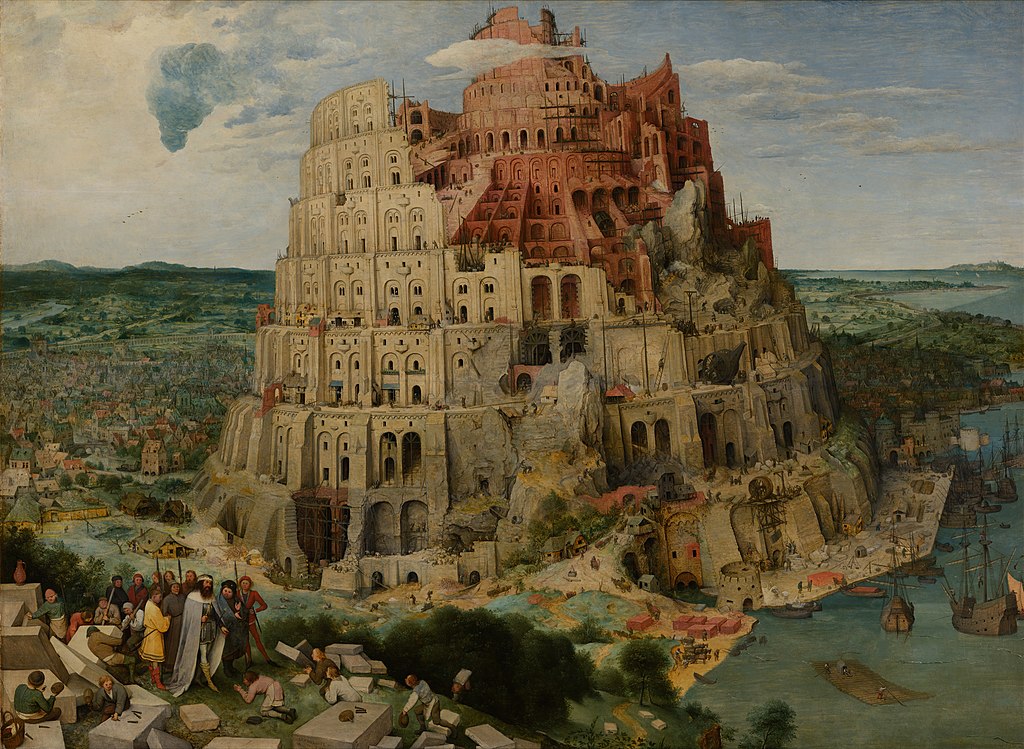
Remember the biblical tale of Babel?
How about diseconomies of scale and diminishing return on investment? This is well established doctrine in economics.
The universe follows laws of Nature. Turns out there are scaling laws that dictate that there are limits on how complex any system can be before it collapses.
What does this mean?
It means we had better start simplifying the ways in which we think about our world, in giant orders of magnitude, with giant paradigm shifts in our worldviews. We have cluttered our global civilization with too much of everything.
We can start by putting down our weapons and understand that people are not your enemies. They simply have different life experiences, education and different exposure to the pieces of the big puzzle.
The only way we will survive is by collaborating to find and create a common understanding of our world based on the variety of human knowledge. Our different and evolving worldviews are a great strength if we choose to see them as assets and not grounds for tribal divisions.
Listen and learn from others. Harmonize. Synthesize. We will all be stronger as a result!
What would happen if we took all the legacy bodies of knowledge accumulated over the past 400 years and reordered them using the ideas of modern physics and information science? Maybe we could eliminate a lot of awkward, convoluted or outdated theories and practices. Perhaps we could set the stage for a new Renaissance, or what The Economist called “a Cambrian Moment” – the world-wide explosion in entrepreneurial activities.
Most sciences, including economics, have not adopted many lessons learned at more fundamental levels of scientific explorations. Our legacy economics paradigm has unnecessary constraints and gaps. We have been getting by because Nature is flexible and we have been able to find sufficient solutions to wayfinding.
In any economic system, adding just one more person, idea or product results in exponential growth in the number of possible interdependencies within the system. So far, these “network effects”have been beneficial. But with accelerating civil complexity, including exponential growth of information, ideas, publications and technologies, our wiggle room is shrinking.
Meanwhile, each individual’s capacity to process information becomes a bottleneck; each of us gets a diminishing portion of all knowledge we collectively produce. Scaling laws dictate that a diseconomy of scale will ultimately restrict growth of economic complexity.
Civilization is an experimental network system that is trying to preserve humanity against the demands of Nature, including the forces of entropy. In order to increase our management capacity, we have built clever theoretical models of how markets work, how economies grow, and how to scale and optimize production.
We also built collaborative intelligence into our bureaucracies. We are even adopting artificial intelligence to manage the volumes of data and assist us in decision-making. However, it is a mathematical probability that our collective civil complexity will outpace our individual, organizational and digital capacity to manage complexity. There is a tipping point with a general diseconomy of scale and diminishing returns on investment.
A new paradigm for managing economic development
Physicist César Hidalgo, a professor at the Massachusetts Institute of Technology’s Media Lab, takes a radically different approach in how we can manage development of our economies. In his book, Why Information Grows: The Evolution of Order, from Atoms to Economies, he argues that if we want to improve the prospects for local, regional and national economic development, we should seriously consider not only the metaphorical ecosystems but the actual physics of information.
Rather than using conventional social science theory, Hidalgo uses physics and information science to explain how everything from atoms to economies evolve and grow. This provides us with a much broader base of concepts and principles with which we can play and perhaps arrive at a super-model for development.
The new paradigm is more efficient and effective in enabling us to imagine our world, complete with technological and economic development. Hidalgo describes the economy as “the system by which people accumulate knowledge and knowhow to create packets of physical order, or products, that augment our capacity to accumulate more knowledge and knowhow and, in turn, accumulate more information.”
Hildago explains that unlike other species, humans have developed an enormous ability to encode large bodies of information outside our bodies – including information embodied in artifacts or objects that we imagine. “Cities, firms and teams are the embodiment of the pockets where our species accumulates the capacity to build [packets of] information,” he says.
Packets of information, such as those generated by an economic region, grow because these network systems use feedback loops to self-replicate and mutate. Generally, there is a reduced risk and higher return on investment by selectively following in the footsteps of success. Platforms, such as incorporation, patents, stock markets and standardized parts, all support this.
According to Hidalgo, the best measure of regional economic diversification is not GDP but the number of distinct products and processes (services) produced in a region. Further, the best region for producing a new drone would be a region that is currently producing helicopters rather than boots.
Hidalgo’s work has a sobering message for policy makers, as Eric Beinhocker, executive director of the Institute for New Economic Thinking at the Oxford Martin School, points out in his review of Hidalgo’s book. This message is: “Growth comes primarily from moving to adjacent opportunities in the product space.”
Information science can benefit regional economies
To stimulate innovation on the shoulders of existing products and processes and thereby increase regional economic diversification and growth, there should be a shared visual database of products and services produced.
Many good models and tools have been created in the information science sub-disciplines of systems science, cybernetics, and management science. Several of these models and tools, such as optimization, have been adopted by business managers.
At Wayfinders Business Co-operative, we are building a web-based platform that will incorporate these foundational concepts and principles to support not only businesses but their regional business ecosystems. Canadians can adopt these models and tools and apply them more broadly in policy, research and investment, as in:
Government Policy: Reconstruct regional development models and policy frameworks using the concepts and tools of foundational information theory;
Research: Collect the appropriate economic data and analyze it in the context of the more meaningful information systems models. This may involve use of machine learning algorithms and gaming simulations;
Investment: Investors, as key stakeholders in regional development, can use information science to better shape investment decision tables and dialogue.
Better utilizing information science would help Canada to take the lead in new management strategies. This will not produce a utopia. The Laws of Nature still prevail. But at least this will buy us some time to reconfigure the way we manage our world for sustainability. On the other hand, continuing with the old strategies – including outmoded economic theories – of the 19th and 20th centuries will ensure Canada’s place as a laggard as opposed to a leader.
Sure, its an over-used expression. But it is true. We are better together. Here are four ways in which we are better together.
· More is Better: You have a problem. Maybe you need to find work and make some money. Ask a group of people for a solution, maybe a job referral. You will get a number of answers or referrals. There is a good probability that you will get an answer that is better than your own, something you hadn’t thought of (remember to return the favour).
· Crowdsource Wisdom: You have a question. Maybe you need to estimate how long it takes to complete a standard project xyz. You ask a large number of qualified people to give their best estimates. Perhaps no one has exactly the right answer. But there is a good probability that the average of all those answers is very close!
· Brainstorming Synergy: You need a creative new solution because the old ones aren’t working. Maybe you need a new slogan for your business. You describe the situation and ask for input from a number of friends. They separately submit their own ideas to a pool or forum. Everyone reviews the shared ideas. Then in a second round of brainstorming they start thinking of new ideas that they hadn’t thought of earlier. You now have a lot of great ideas! You can then run a third round with the group to critically review and select the best new original idea! This is synergy, where the whole (group) is greater than or different from the sum of the parts (individuals).
· Apply Talent to Task: You need to complete a project but you don’t have all the required skills for the various project components. Recruit trusted people who have the talents that you don’t have and delegate the appropriate tasks to them. Recognize and reward them accordingly. Rinse and repeat!
Humans have always been social animals who depend on co-operation. As our world gets more complex we need to turn more often to these simple methods of collective intelligence to expand our world of possibilities and get things done!
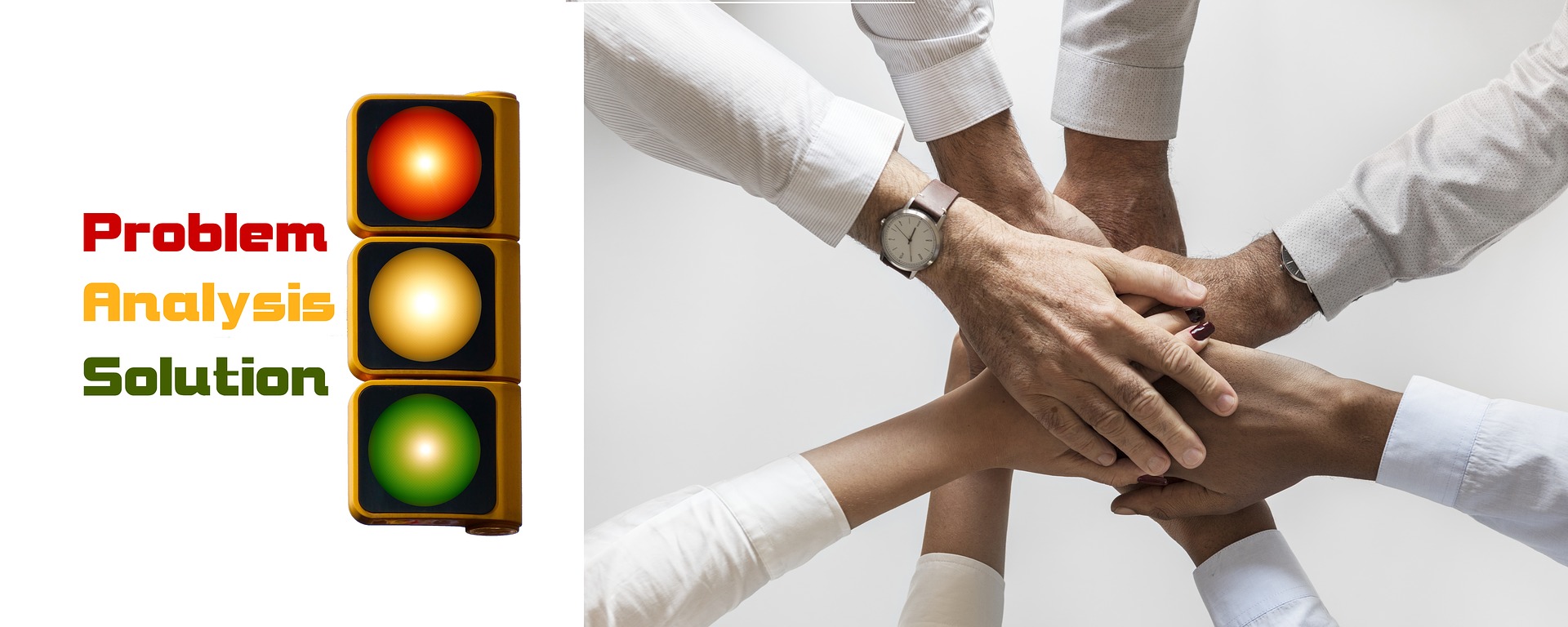
Teamwork
Keep in mind the following:
Make it FUN!: Creativity can be fun for its own sake, but making it fun will attract more people and probably generate more good ideas.
Reciprocate: It can be difficult to evaluate each person’s contribution, so keep track and be ready to help others in a similar fashion when they ask. This should be a win-win experience.
Give Credit: Show appreciation for the contributions of others, even small contributions. This builds a culture of collaboration that serves everyone.
Diversity and Inclusion: This is not a political movement, its always been part of the facts of life — including a diverse range of backgrounds in your group will usually produce better surprises and outcomes
Trust and Respect: Trust, respect and fair play will always be valid requirements for any collaboration. It will usually be reciprocated.
While in training for cognitive coaching years ago, I learned that people under stress resort to their areas of greatest strengths. This means that whatever are your dominant talents, dispositions, or personality traits, these will become more pronounced in your thinking.
From an evolutionary psychology POV, this is probably an inherited survival strategy for the community. We bond over a common outside threat and specialize in what we do best to play our roles.
At the same time, under times of stress we become more inclined to follow a strong and smart leader (of your choice), focus and prepare to follow the mission strategy. The natural leader has a personal strength of being able to 1) assess a situation (opportunities and threats), 2) stay cool, 3) understand the human resources (strengths and weaknesses), 4) strategize and 5) appropriately delegate task to talent. A temporary steeper social hierarchy of control emerges for unified action.
Mother Nature made you a creative problem-solver within your domain, so ‘necessity is the Mother of invention!’ So, follow your inner Nature. Follow your chosen leader. Let your talents and passions flow. May the force of Nature be within you!
All of this flows so naturally that you are almost completely unaware. But you feel the stress hormones in your blood – adrenaline and cortisol. You are ready to do battle or engage the most dangerous game. You are pumped, but now the directions are unclear. We’re just told to ‘stay put‘.
In our ancestral tribal past we knew the leaders, our allies and the enemies. Our plans were practiced and perfected. But now, ‘someone stepped on the ant hill’. We don’t know our positions. We desperately seek sound leaders, their plans and our allies. Today, communicating on the web is like talking to the souls of the disembodied dead. The enemy is invisible but we see them everywhere. We disagree on leaders. Potential allies are either ghastly outspoken radicals or they’re dead quiet.
We need to pause, raise our mindfulness, divert our focus and energies from battle readiness to something constructive, like building our future together. Getting into shape. Putting our homes in order. Making new friends. Starting or reinventing your business. Building a better community. Joining an energy conservation initiative. The options are limitless. Start small or build on your accomplishments and test reality.
Your body has received a call to action!
Divert the stress to a constructive activity that calls for your special talents and passions! Now is the time to deploy your super-powers for the good of humanity and our planet!









 Randal Adcock