

Abstract
This paper introduces the hypothesis of “fractal intelligence”, proposing that the essence of intelligence is self-organization, or negentropy, which manifests across different scales of complexity in natural systems. Intelligence, in this view, is not merely a property of cognitive beings but an inherent pattern in nature that resists entropy. By examining self-similar patterns, emergent properties, and recursive processes, we suggest that intelligence operates through fractal structures, from the molecular and biological scales to human cognition and societal systems. This hypothesis offers a unifying framework to explore intelligence as a fundamental characteristic of nature, challenging traditional notions that restrict intelligence to conscious thought. We explore the implications of fractal intelligence across various disciplines, including biology, cognitive science, and systems theory, and suggest future research directions to empirically test this hypothesis.
Introduction
The concept of intelligence has traditionally been restricted to the domain of cognitive beings, especially humans, where it is viewed as the ability to reason, solve problems, and adapt to complex environments. However, recent advances in systems theory, complexity science, and artificial intelligence challenge this reductionist view by demonstrating that intelligence may be a broader, emergent property of systems—extending beyond conscious agents. This paper introduces the hypothesis of “fractal intelligence”, a model in which intelligence is viewed as a self-organizing, negentropic phenomenon that manifests at various scales of complexity across natural systems. Central to this hypothesis is the idea that intelligence is inherently fractal in nature—self-similar, recursive, and emergent across different levels of organization. Whether in biological organisms, ecosystems, human cognition, or artificial systems, intelligence may be governed by the same fundamental principles of self-organization that characterize fractal structures in nature.
In this view, intelligence is synonymous with negentropy—an organized complexity that arises contrary to the second law of thermodynamics, resisting the tendency toward disorder.

Fractals, Self-Organization, and Negentropy
A “fractal” is a geometric structure characterized by self-similarity across different scales, meaning that its pattern repeats regardless of the level of magnification. Fractal structures are abundant in nature, from the branching patterns of trees and rivers to the clustering of galaxies in the universe. Fractals exhibit recursive processes where simple rules generate complex, adaptive patterns. These structures also emerge through self-organization—a process where local interactions among components give rise to global patterns without centralized control.
“Negentropy” (negative entropy) refers to the process by which systems organize and maintain complexity in the face of entropy, the natural tendency toward disorder. The formation of stars, the development of biological organisms, and the emergence of consciousness all represent instances of negentropy, where systems self-organize into increasingly complex forms that resist entropy’s pull.
In the context of intelligence, we propose that negentropy is the hallmark of “intelligent systems”—entities that organize and adapt by increasing complexity and coherence across multiple scales. Intelligence, in this model, becomes synonymous with the fractal nature of self-organization, as the same recursive, self-similar processes that define fractals may be responsible for the emergent complexity we associate with intelligent behavior.
Fractal Intelligence as a Hypothesis
The hypothesis of “fractal intelligence” posits that intelligence operates through fractal structures at multiple levels of reality, from the molecular and cellular levels of biology to the cognitive and social structures of human systems. Just as a fractal exhibits recursive self-similarity, intelligence manifests recursively at different scales—each level exhibiting its own forms of complexity and adaptation while maintaining coherence with higher and lower levels.
Biological Systems and Fractal Intelligence
At the biological level, fractal intelligence can be observed in the self-organizing processes that govern cellular metabolism, gene expression, and neural networks. For instance, the branching architecture of neurons mirrors the fractal structure of tree roots or blood vessels, facilitating efficient communication across vast networks. This efficiency in structure is not merely a physical phenomenon but a reflection of the adaptive, self-organizing intelligence of the organism. The feedback loops and regulatory mechanisms that enable biological homeostasis are fractal in nature, with intelligence emerging from recursive processes of adaptation and self-organization.
Cognitive Systems and Fractal Intelligence
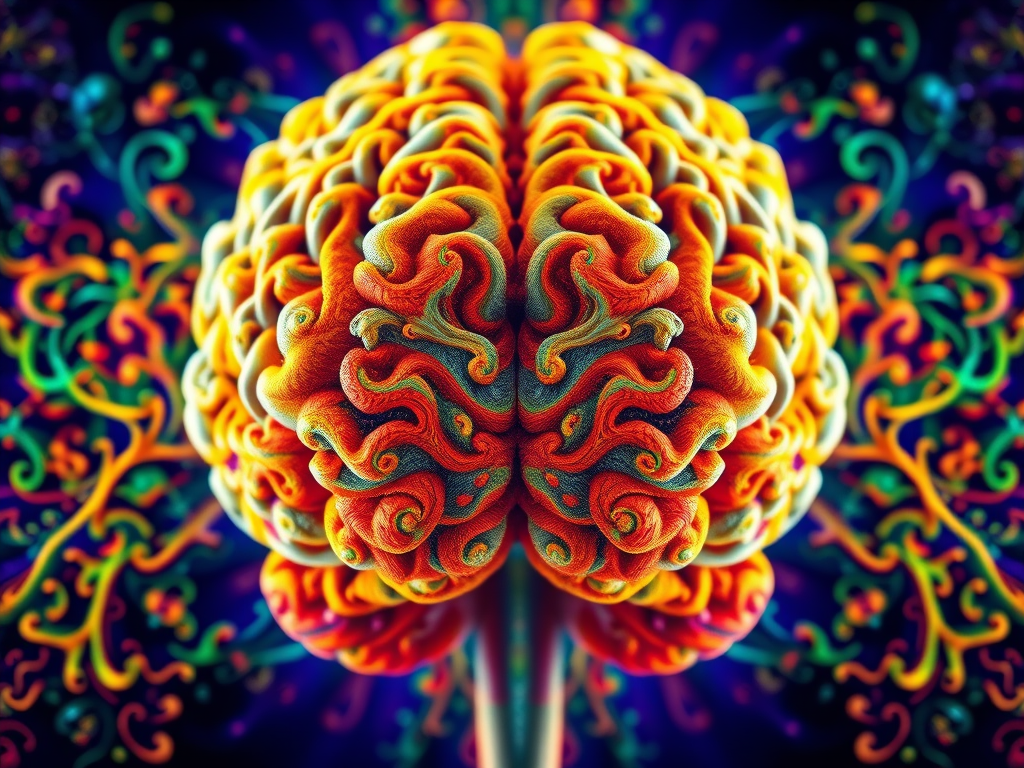
Human cognition may also be understood as fractal. Cognitive processes exhibit recursive feedback loops, where higher-order thoughts influence lower-level perceptions, and vice versa. Concepts and ideas are often built hierarchically, with complex thoughts emerging from simpler sub-components, much like how fractal patterns are generated from simple rules. Additionally, learning processes involve the recursive refinement of information, with each new insight reshaping our understanding at multiple levels. Fractal intelligence in cognition is also evident in how humans create mental models of the world, scaling their understanding from individual experiences to abstract, global concepts. Cognitive intelligence thus becomes an expression of fractal negentropy, as the mind organizes information into increasingly complex and coherent patterns.
Collective Systems and Fractal Intelligence
Fractal intelligence extends beyond individual cognition to collective intelligence in social systems. Societies, organizations, and ecosystems all exhibit self-organizing principles that mirror fractal structures. Social networks, for instance, often form hierarchical, branching patterns, where small groups are nested within larger ones, creating layers of interaction and influence. The evolution of collective intelligence within these systems may follow fractal rules, with local actions propagating through feedback loops to affect global outcomes.
The resilience of social and ecological systems is often tied to their fractal structure. These systems can adapt to external shocks by redistributing resources and reorganizing themselves at different scales, much like a fractal adjusts while maintaining its overall coherence.
Fractal Intelligence and the Universe: A Cosmological Perspective
Fractal intelligence may also provide a new lens through which to view the organization of the universe. In cosmology, the large-scale structure of the universe has been shown to follow fractal-like patterns, with galaxies clustering in self-similar ways across different scales. If intelligence is understood as the self-organizing principle of the universe, it is possible to hypothesize that the universe itself exhibits fractal intelligence, organizing matter and energy in negentropic patterns. This cosmological fractal intelligence could manifest in the way galaxies, stars, and planetary systems form complex, adaptive networks over time. Intelligence, then, would not be a property restricted to biological life but a fundamental principle that governs the self-organizing processes of the cosmos.
Implications for Artificial Intelligence and Future Research
The hypothesis of fractal intelligence has significant implications for the development of artificial intelligence (AI). Current AI systems often rely on hierarchical models that are limited in their ability to self-organize across multiple scales. By incorporating fractal principles into AI design, researchers could develop systems capable of more adaptive, self-similar organization, allowing AI to exhibit more natural, intelligent behavior.Future research should aim to empirically test the hypothesis of fractal intelligence by identifying fractal patterns in various intelligent systems—biological, cognitive, social, and technological. By mapping these patterns and understanding the recursive rules that govern them, we may begin to uncover a unified theory of intelligence as a negentropic, fractal phenomenon.
Conclusion
The hypothesis of *fractal intelligence* offers a novel way of understanding intelligence as a self-organizing, negentropic principle that operates at multiple scales of complexity in nature. Whether in biological systems, human cognition, or collective social structures, intelligence manifests as a fractal—self-similar, recursive, and adaptive. By extending this concept to cosmology and artificial intelligence, we open new avenues for research and challenge traditional notions of intelligence as limited to conscious thought. Fractal intelligence presents a unifying framework to explore the nature of intelligence as an inherent pattern in the universe, driven by the fundamental principle of negentropy.
Prepared by ChatGPT
Directed by Randal Adcock, M.A.
References
**Bertalanffy, L. von. (1968). *General System Theory: Foundations, Development, Applications*. New York: George Braziller.
Mandelbrot, B. B. (1983). *The Fractal Geometry of Nature*. New York: W. H. Freeman and Company.
Prigogine, I., & Stengers, I. (1984). *Order Out of Chaos: Man’s New Dialogue with Nature*. New York: Bantam Books.
Simon, H. A. (1962). “The Architecture of Complexity.” *Proceedings of the American Philosophical Society*, 106(6), 467–482.
Varela, F., Maturana, H., & Uribe, R. (1974). “Autopoiesis: The Organization of Living Systems, Its Characterization and a Model.” *Biosystems*, 5(4), 187–196.
 Randal Adcock